
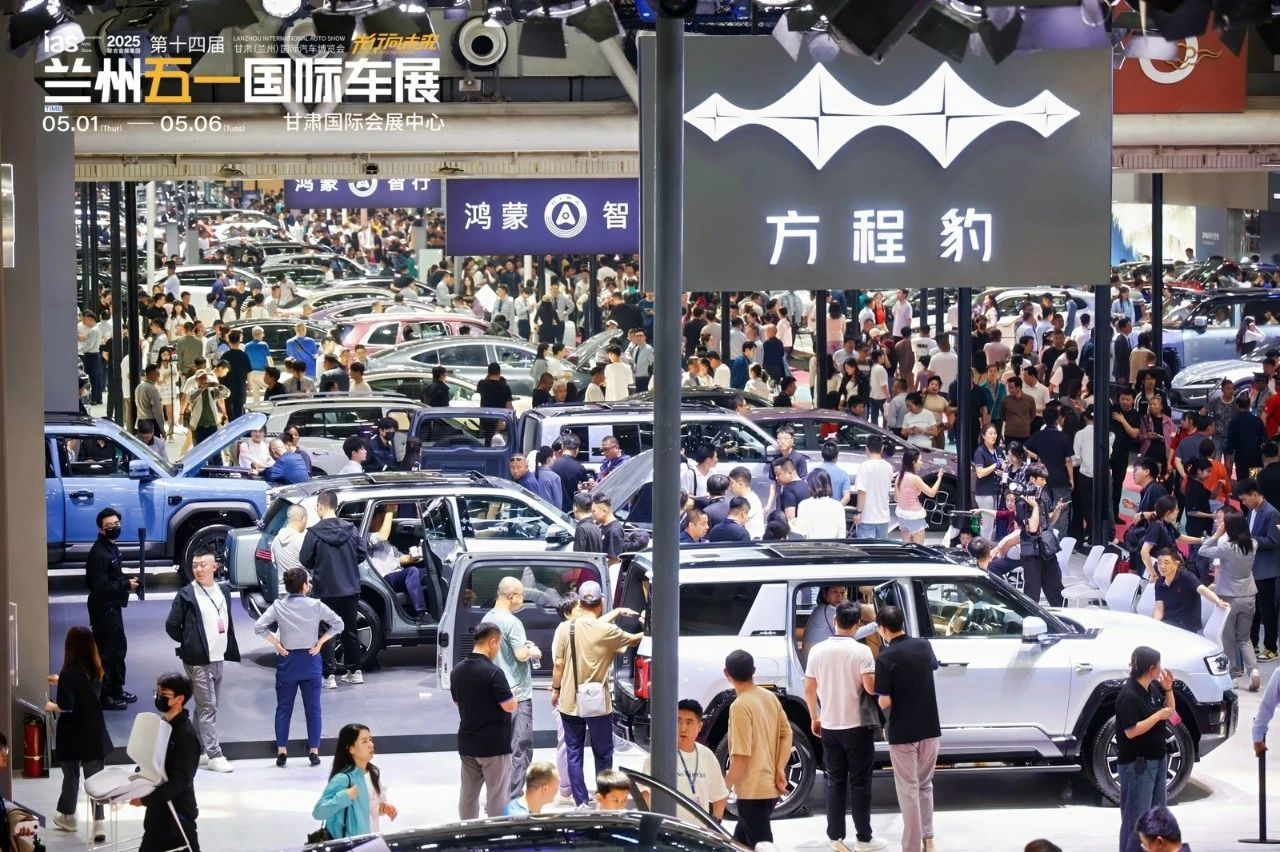
On August 13, the 15th China Western (Lanzhou) International Auto Expo officially kicked off at the Gansu International Convention and Exhibition Center. As a highly influential and large-scale automotive consumer expo in Northwest China, this year's auto show will run until August 18. The six-day automotive extravaganza not only delivers an immersive automotive cultural experience blending visual appeal and technological innovation for Lanzhou residents and consumers from surrounding areas, but also serves as a vital platform for boosting regional auto consumption and invigorating the market through tangible purchase incentives and cross-sector consumption synergy.
The expo demonstrates remarkable strength in both scale and lineup. Covering a total exhibition area of 40,000 square meters, it has brought together numerous mainstream domestic and international auto brands, including Xiaomi, BYD, AITO, XPeng, Li Auto, NIO, Hongqi, Mercedes-Benz, BMW, and Audi. The displayed models comprehensively cover luxury cars, family vehicles, new energy vehicles (NEVs), and traditional ICE vehicles, fully meeting the diverse mobility needs of different consumer groups. Notably, the expo has become a showcase for many highly anticipated new models. Vehicles such as the AITO M9/G9, IM L6, XPeng MONA M03, BYD Qin Max, and Hongqi H7 have made their regional debuts in Lanzhou, allowing consumers in Northwest China to experience firsthand the latest achievements of China's auto industry in new energy and intelligent technologies.
Against the backdrop of national policies vigorously promoting auto trade-ins and boosting auto consumption, this year's expo has actively responded to the call by directly translating policy dividends into tangible benefits for car buyers. According to on-site reporting, consumers purchasing vehicles at the expo can enjoy trade-in subsidies. Specifically, those trading in an old car for a new one can receive subsidies of up to 15,000 RMB, while those scrapping an old car to buy a new one can get up to 20,000 RMB. Consumers opting for NEVs can also stack these with other preferential policies, such as a 50% reduction in purchase tax. This series of substantial subsidy measures undoubtedly provides strong support for consumers to reduce car-buying costs and accelerate the phase-out and replacement of aging vehicles.
In addition to government subsidies, participating brands have shown great sincerity by launching expo-exclusive pricing. On-site perks include direct cash discounts, financial interest subsidies, and low down payments, with comprehensive discounts on some popular models exceeding 100,000 RMB. Furthermore, to further ignite consumers' enthusiasm for car purchases, UnionPay QuickPass has simultaneously launched a deposit reduction campaign, specifically allocating 3,000 discounted slots on a first-come, first-served basis, greatly enriching consumers' payment discount options.
Beyond the core demand of buying a car, this year's expo has innovatively created an integrated scenario of "car purchase + leisure + lifestyle consumption," catering to the exhibition and leisure needs of diverse groups. The venue is equipped with multiple interactive perks: visitors can receive exquisite gift packages upon arrival; ticketed attendees can redeem practical camping chairs; and successful buyers can participate in a "smash the golden egg" lucky draw, with prizes ranging from smartphones and aerial photography equipment to high-end camping gear.
More impressively, the auto show has broken the boundaries of traditional exhibitions, achieving deep integration with urban commerce. By simply uploading their expo ticket stubs, visitors can claim consumption vouchers worth up to 300 RMB. These vouchers are widely applicable, covering over 600 core urban merchants, including Guofang Center and Shanshan Outlets. This initiative not only extends visitors' dwell time but also effectively drives associated consumption in dining, shopping, and entertainment, truly realizing the spillover effect of the MICE economy where "a successful expo enlivens an entire city."
In recent years, with the steady economic development and rising consumption levels of residents in Northwest China, the auto consumer market has demonstrated tremendous potential. As the capital of Gansu Province and a transportation hub in the Northwest, the vitality of Lanzhou's auto consumer market directly impacts the automotive distribution landscape across the entire region. The hosting of this year's expo coincides with a critical window for the intensive rollout of national and local policies aimed at boosting consumption and stabilizing growth. The organizers have accurately grasped the pulse of the market, closely integrating policy dividends with market demands.
Industry analysts point out that the successful holding of the 15th China Western (Lanzhou) International Auto Expo is not only a strong boost to confidence in the current auto consumer market but also a vivid practice of the MICE industry's transition towards "expo-city integration" and "cross-sector consumption." Today, with the continuous increase in NEV penetration and the accelerated adoption of intelligent technologies, auto shows are no longer merely venues for vehicle display and transaction; they have evolved into comprehensive platforms that lead lifestyles, promote automotive culture, and drive regional economic growth. As the expo continues, it is expected to attract more citizens to the Gansu International Convention and Exhibition Center to witness this automotive carnival belonging to Northwest China.